 WarSimBox

The “Zerstörer” idea
In the mid-1930s many air forces faced the same problem: single-engined fighters lacked the range to escort bombers to distant targets. Germany’s answer was a long-range, twin-engined fighter carrying heavy guns in its nose. Göring set great store by the type, and the Zerstörer units were regarded as an elite.
With all its guns grouped in the nose, they did not need to be harmonised to converge at a set range like wing guns: two cannon and four machine guns poured concentrated fire at a single point.
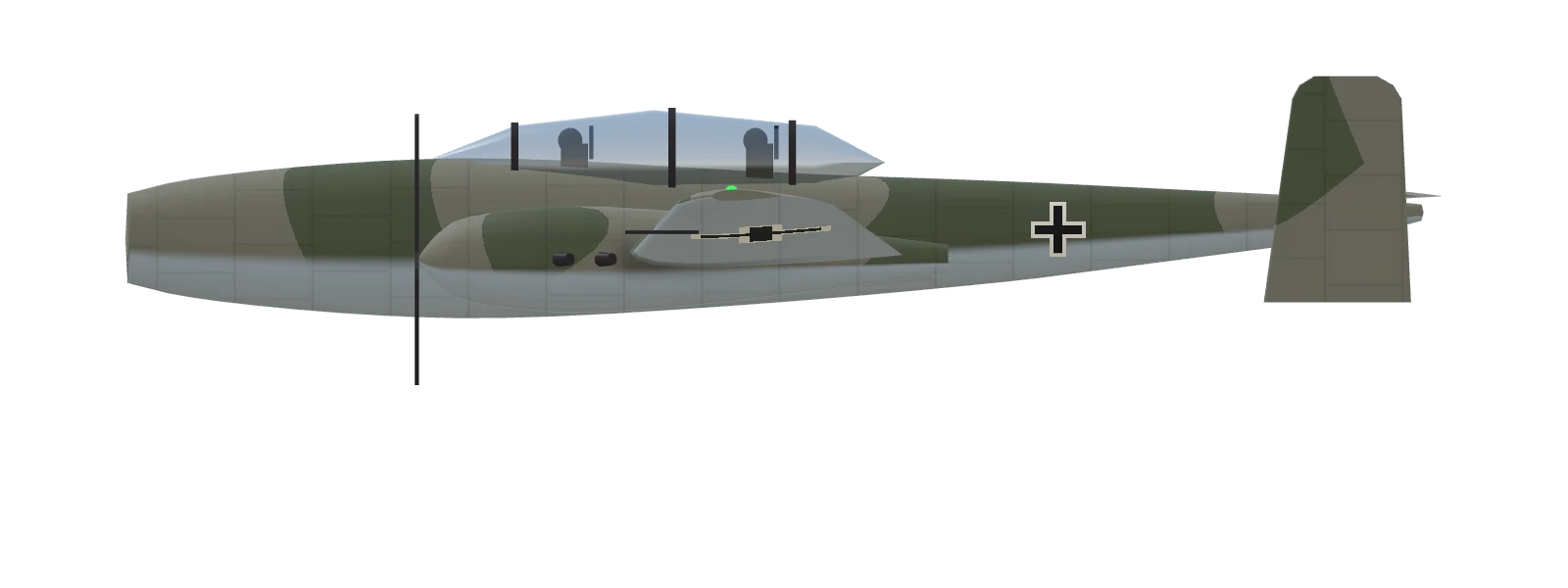
Early successes
Over Poland, Norway and France the Bf 110 did well against older fighters and against bombers. In December 1939, over the Heligoland Bight, German fighters, Bf 110s among them, shot down most of a force of RAF Wellingtons attacking by day; these losses helped turn RAF Bomber Command towards night bombing.
The Battle of Britain
Over Britain the Bf 110’s limits became clear. It was heavy against Hurricanes and Spitfires: slow to accelerate, slow to roll and outturned. Losses were so heavy that in time Bf 110 formations needed Bf 109 escorts themselves. Bf 110 crews formed defensive circles, flying round in a ring so that each covered the tail of the one ahead.
Night fighter
The Bf 110 found its true role at night. Fitted with the antennas of the Lichtenstein radar on their noses, Bf 110s made up most of the German night-fighter force for much of the war, defending Germany against RAF night bombers. One of its most famous flights had nothing to do with combat: in May 1941 Rudolf Hess flew a Bf 110 to Scotland on his own.
In WarSimBox
In the game it is a heavy fighter that fights with energy tactics. The two cannon and four machine guns in its nose do heavy damage in a single burst, making it effective against bomber formations. Drawn into a turning fight with single-engined fighters it loses; its rear gunner gives it some protection. With plenty of fuel it has a long range, and it can carry a drop tank or 2 × 250 kg bombs.
Unlocked in the aircraft tree after researching Improved V12 inline engine. Leads on to: Focke-Wulf Fw 190 A-5, Lockheed P-38J Lightning.
- Top speed
- 544 km/h · 4,500 m
- Climb
- 10.8 m/s
- Sustained turn
- 25.2 s
- Stall speed
- 163 km/h
These figures come from the game’s flight model (climb, turn and stall at sea level).
Fly it in WarSimBox