 WarSimBox

A cleaner 109
On the F the wingtips were rounded, the cowling slimmed, the radiators redesigned and the external struts of the tailplane removed; the tailwheel became retractable too. The wing cannon went, replaced by a single cannon firing through the propeller hub from inside the engine. Firepower dropped, but the aircraft grew lighter, faster and much better in the roll.
Early Fs suffered from tail flutter and several aircraft lost their tails; the problem was solved by strengthening the structure.
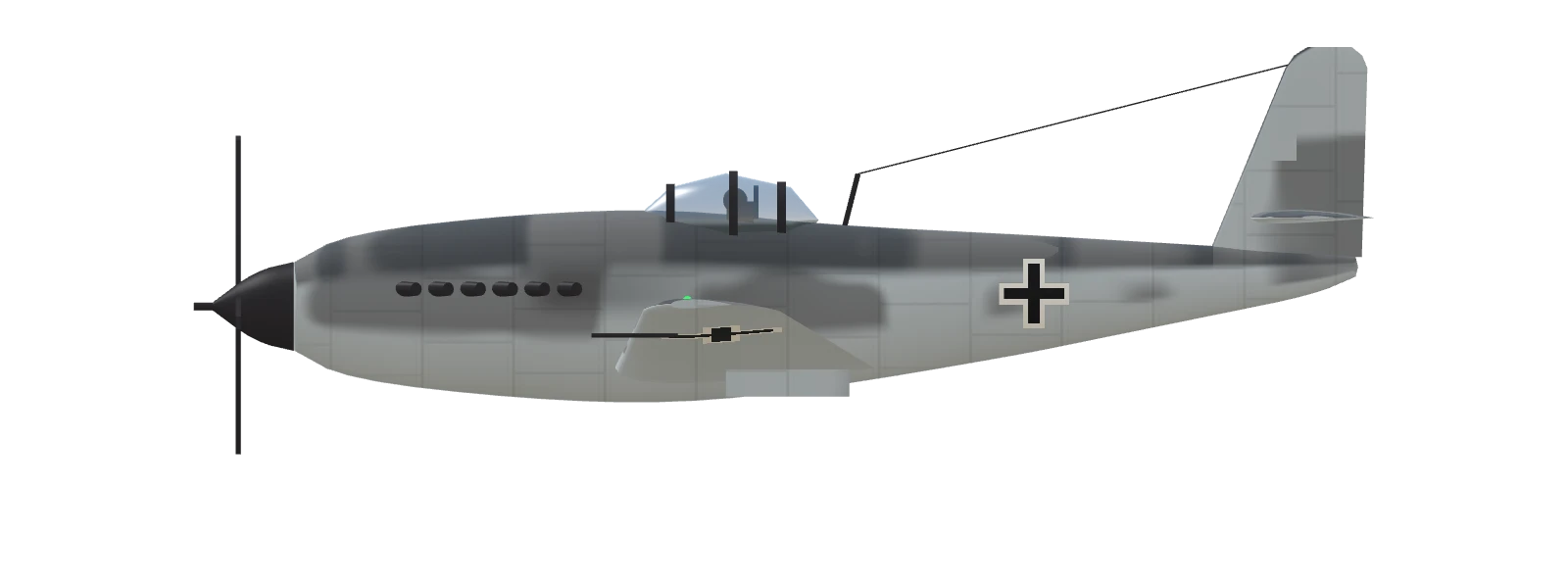
The top fighter of 1941–42
In 1941 the Bf 109 F outclassed the Spitfire Mk V over the Channel. In the attack on the Soviet Union in June 1941 it made up most of the German fighter force and had a crushing advantage over older Soviet fighters such as the I-16. In North Africa pilots like Hans-Joachim Marseille made their names in the Bf 109 F.
In 1942 it gave way to the Bf 109 G, with a more powerful engine and heavier armament, but heavier to fly.
In WarSimBox
In the game it is an energy fighter and the best balanced of the 109 family: fast, a good climber and a good roller. Its single cannon carries more ammunition than the Emil’s two. It avoids turning fights and dives in from above; when pursued it escapes with a negative-g push-over.
Unlocked in the aircraft tree after researching Messerschmitt Bf 109 E-4 and 100-octane fuel. Leads on to: Messerschmitt Bf 109 G-6.
- Top speed
- 632 km/h · 5,500 m
- Climb
- 18.8 m/s
- Sustained turn
- 19.9 s
- Stall speed
- 150 km/h
These figures come from the game’s flight model (climb, turn and stall at sea level).
Fly it in WarSimBox